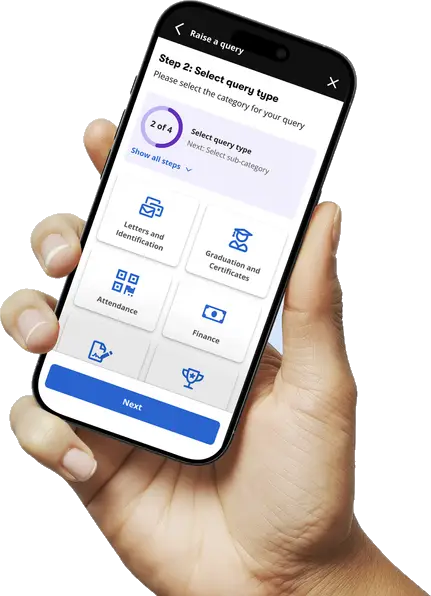
- Role
- Led the design
- Organisation
- BPP
- Platform
- iOS and Android app
- Worked with
- Product, engineering, service design, student support
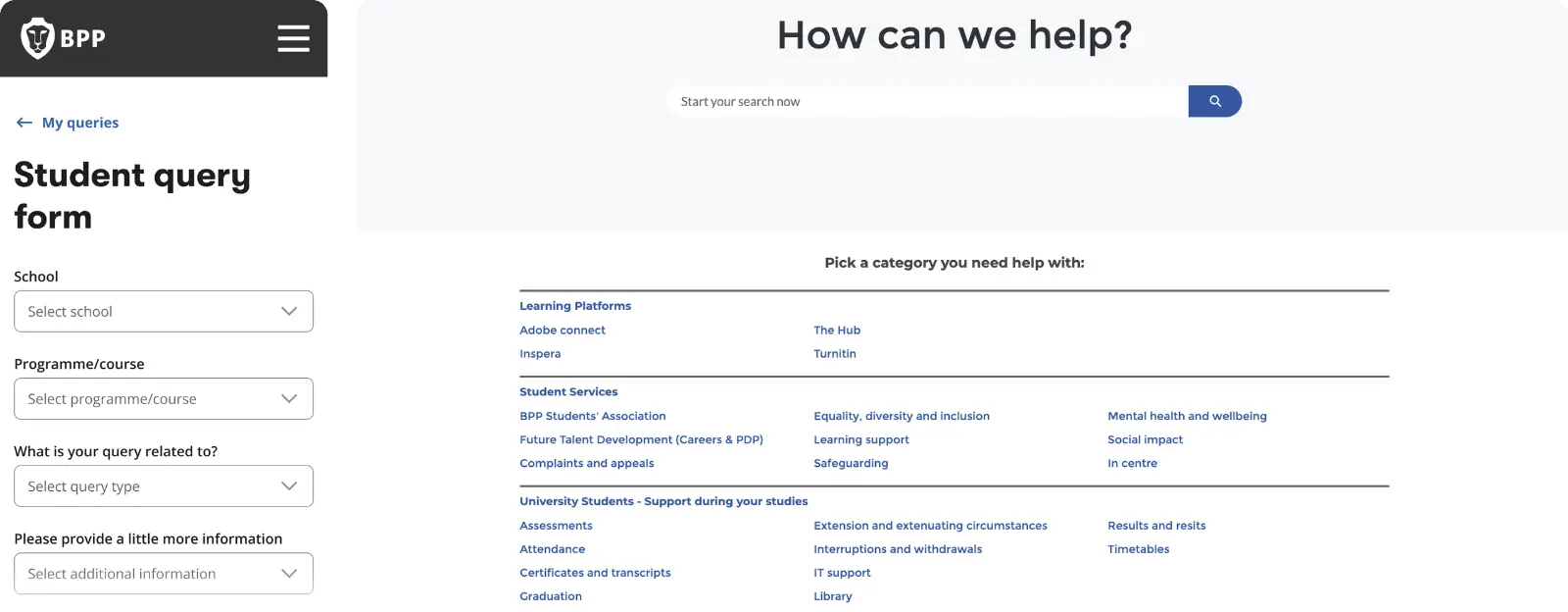
Four steps, each one narrowing the question.
We reduced an open-ended support request into a small number of guided decisions, helping students describe what they needed without having to understand the structure behind the service.
- 01School and programme
- 02Query type
- 03Sub-category
- 04Details
Help built into the path
- 01Help-centre nudgesRelevant answers as the query takes shape.
- 02Duplicate detectionIf you’ve already asked, you see where it’s up to.
- 03Confirmation promptsA quick check before anything is sent.
- 04Deliberate light frictionJust enough to make self-service the easier first move.
- 05In-app status notificationsNo more checking email to see what happened.
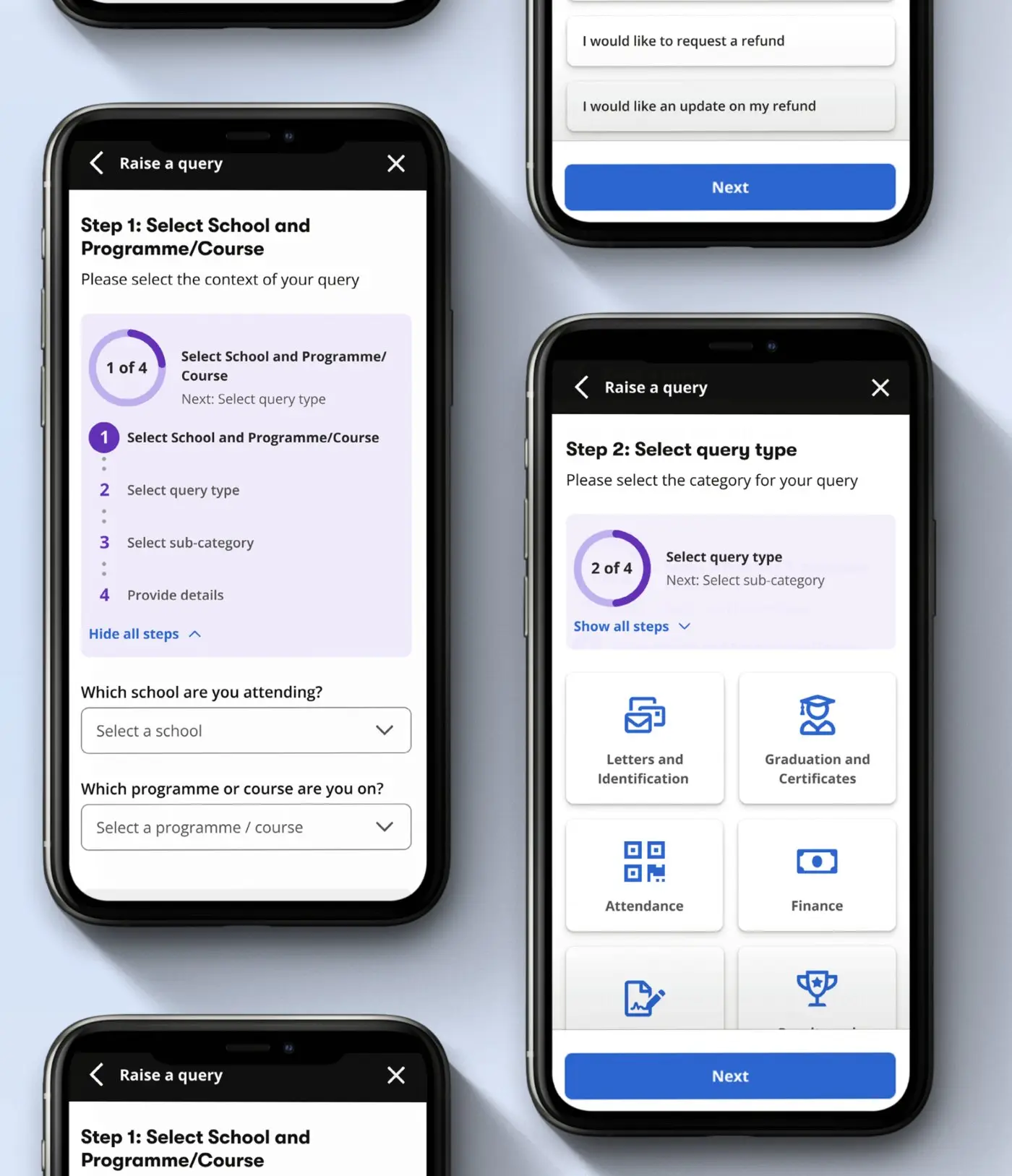
Try the query flow.
The full journey, from choosing a category to rating the reply, with help suggested along the way.
So we changed the order.
Rather than asking students to choose a department or category first, we started with the problem they were trying to solve.
The chatbot wasn’t the destination. It was the first step towards the right answer: simpler questions were handled there, self-service came next, and a human support request remained the fallback when neither could help.
- 01 → FirstChatbot first
- 02 → ThenSelf-service next
- 03 → Only when neededRaise a Query
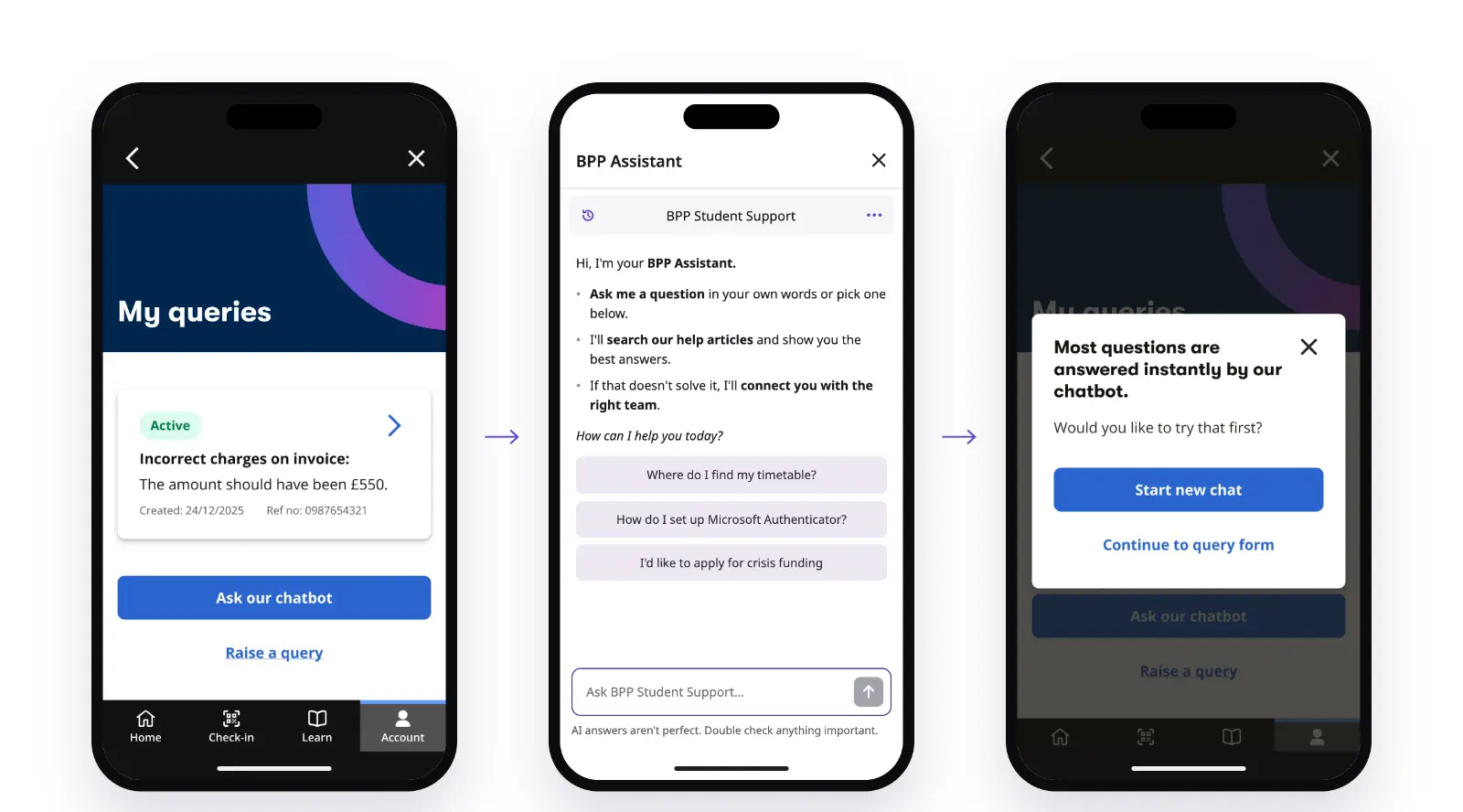
We tested the new order.
Every query also told us something. The patterns fed into product priorities, help content and chatbot training.
In support journeys, removing friction completely can work against you.
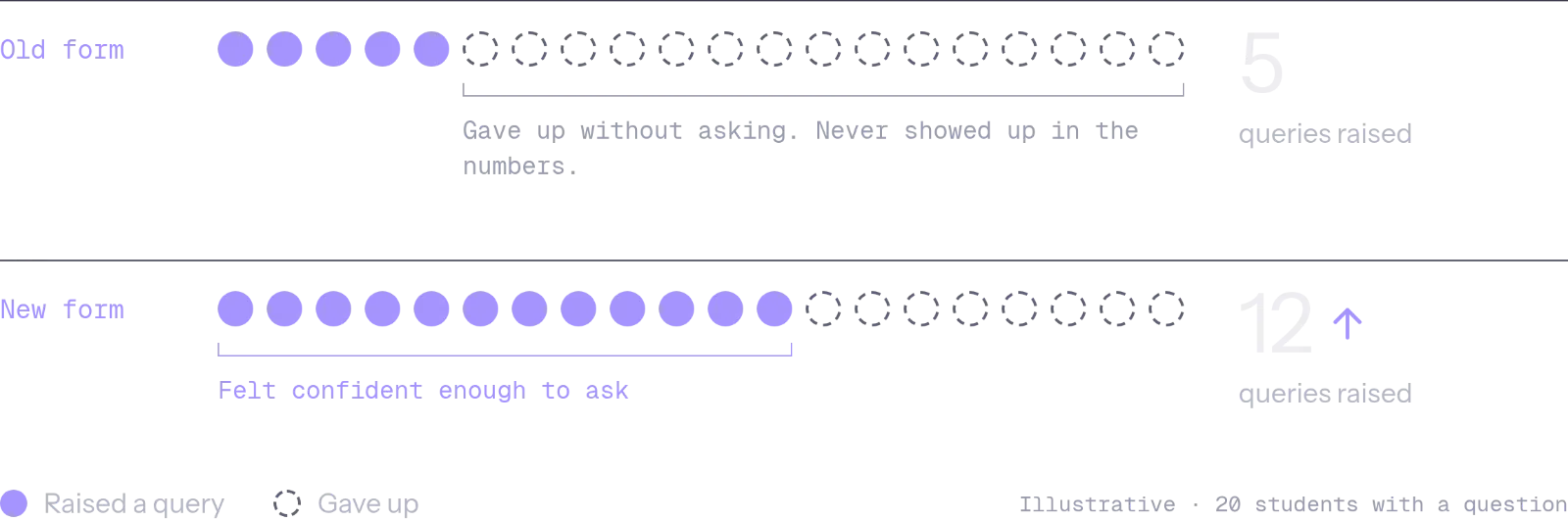
The new journey did what it was designed to do: asking for help got easier. But support measured success in tickets, and by that measure we’d made things worse. Both were true. Some of the friction I’d removed had been doing a job, filtering out questions the help centre could already answer.
The fix wasn’t to make asking harder again. It was to change the order: help first, a person only when needed.
Now, before I remove any friction, I ask two questions. What is this step doing for the service? And who’s measuring success differently from me?